


Leather or fabric is one of the first forks in the road when shopping for a new sofa, and an American Furniture Leather Couch is usually the first place that decision gets tested in person. The two materials look completely different on a showroom floor, but the real differences show up months later, in daily use.
This guide compares American Furniture Warehouse’s leather and fabric sofa options side by side: durability, comfort, maintenance, price, and which one actually fits different households better. By the end, you’ll know which material makes sense for your living room instead of guessing based on looks alone.
Listen to this guide
Is an American Furniture Leather Couch Worth It?

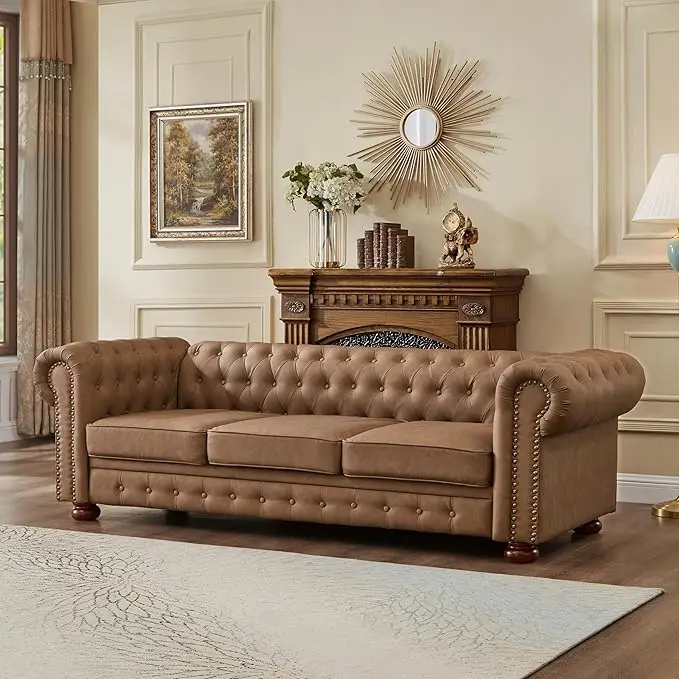
An American Furniture Leather Couch is an excellent investment for households that value durability, easy maintenance, and a timeless appearance. Leather resists spills better than fabric, making it a practical choice for homes with kids, pets, or frequent visitors.
The main tradeoff of an AF Leather Couch is its higher upfront cost and firmer feel compared to fabric sofas. If you prioritize long-term durability and easy cleanup, leather is the better option, while fabric sofas are ideal for those who prefer a softer, cozier seating experience.
Related Article:
- American Furniture Warehouse Theater Seating
- American Furniture Beds: Loft, Murphy & Bedroom Sets 2026
- For the full product lineup across categories, see the American Furniture Warehouse Products Buying Guide.
American Furniture Couch Options: Leather vs Fabric
American Furniture Couch shoppers generally choose between three broad categories: genuine leather, faux leather (bonded or PU leather), and fabric upholstery in a range of weaves. Each comes with a different price point and a different set of tradeoffs.
Genuine leather sits at the top of the price range but typically lasts the longest and develops a natural patina over time. Faux leather looks similar at a glance but wears differently, tending to crack or peel years sooner than genuine leather under heavy daily use.
American Furniture Couch Buying Basics
American Furniture Couch shopping starts with deciding how the piece will actually be used day to day. A sofa in a formal living room that sees occasional use has very different requirements than one in a family room that handles daily lounging, meals, and pets.
Frame construction matters as much as the upholstery choice. Look for kiln-dried hardwood frames with reinforced joints regardless of whether you land on leather or fabric, since a weak frame will fail well before the upholstery does.
Couch American Furniture Warehouse Shoppers Choose Most
Couch American Furniture Warehouse shoppers gravitate toward most often falls into the mid-range price tier, balancing decent leather or fabric quality against a budget that still leaves room for other living room furniture. Entry-level sets sell well too, particularly for guest rooms or first apartments.
Higher-end genuine leather sets are a smaller but steady share of sales, usually going to households furnishing a primary living room they expect to use for a decade or more without replacing it.
American Furniture Leather Couch Pros and Cons
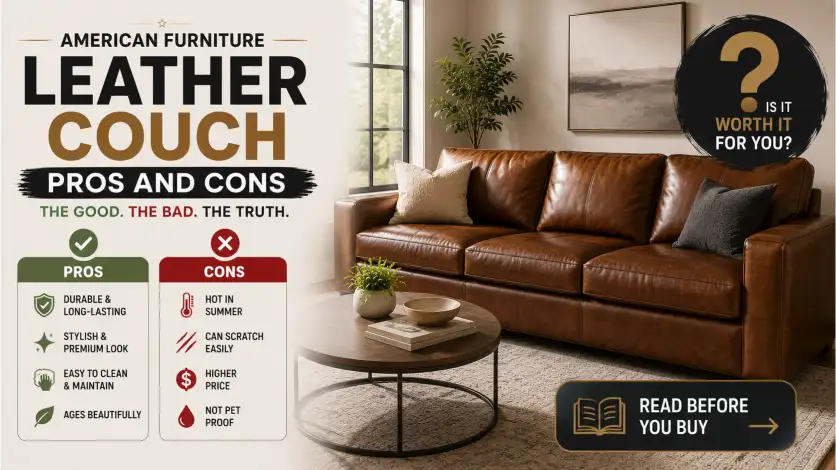
An American Furniture Leather Couch offers a few clear advantages: easy spill cleanup, resistance to pet hair clinging to the surface, and a look that tends to read as more formal or polished. It also tends to outlast fabric under heavy daily use, assuming the frame underneath is solid.
The downsides are real too. An AF Leather Couch can feel cold in winter without a throw blanket, shows scratches from pets more visibly than a textured fabric would, and costs more upfront than a comparable fabric sofa in most collections.
American furniture leather Couch Care & Durability
American furniture leather couch maintenance is fairly simple: wipe spills immediately with a dry cloth, avoid direct sunlight where possible to prevent fading, and condition the leather every few months to keep it from drying out and cracking.
Genuine leather, cared for properly, can last 15 to 20 years or more, while faux leather typically holds up for 5 to 8 years before cracking becomes noticeable. That gap in longevity is worth factoring into the total cost, not just the sticker price.
Fabric Sofa Pros and Cons
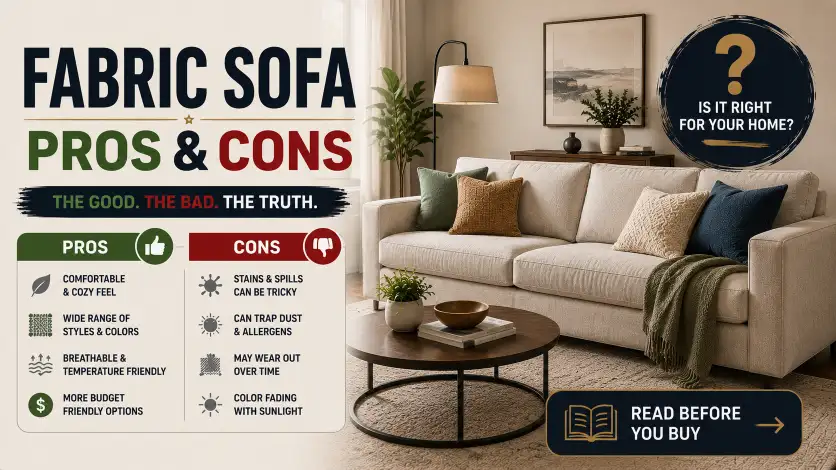
Fabric sofas typically win on comfort and warmth, since most weaves feel softer and less temperature-sensitive than leather. They also tend to offer a wider range of colors and patterns, since fabric dyes more easily than leather.
The downside is stain resistance. Fabric absorbs spills rather than letting them sit on the surface, which means faster action is needed to prevent a permanent stain, and pet hair tends to cling to fabric more than to a smooth leather surface.
American furniture sectional couch vs Standard Sofa Fabric Options
american furniture sectional couch shoppers face an extra decision beyond leather versus fabric: modular sectional pieces versus a standard two- or three-seat sofa. Sectionals maximize seating in larger rooms but need more total floor space than a single sofa.
Fabric sectionals in particular are popular for family rooms, since the larger surface area benefits from fabric’s softer feel during long movie nights or lounging sessions compared to a leather equivalent.
AFW Leather Couch vs Fabric Sofa: Price Comparison
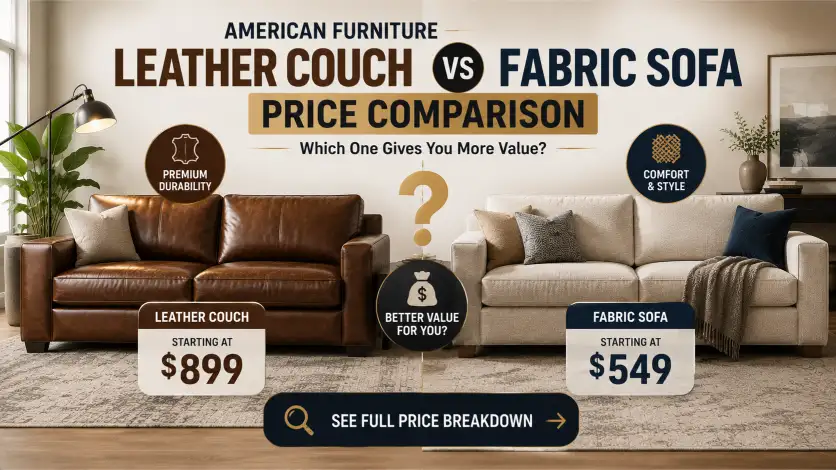
An American Furniture Leather Couch generally costs more than a comparable fabric sofa because of the higher price of leather materials. Faux leather offers a more affordable alternative, while fabric sofas are available across a wider range of price points, from budget-friendly options to premium performance fabrics.
Although the initial investment is higher, an AF Leather Couch often delivers better long-term value thanks to its durability and extended lifespan. Over years of daily use, leather can prove more cost-effective than a lower-priced fabric sofa that may need replacement sooner.
Which Fits Your Household: American Furniture Leather Couch or Fabric Sofa?
Choose an American Furniture Leather Couch if your home experiences daily use, spills, or pets, and you want furniture that’s easy to clean and built for long-term durability. Leather also creates a sleek, timeless look that works well in both modern and traditional interiors.
Choose a fabric sofa if you prefer a softer feel, warmer seating, and a wider selection of colors and patterns. If you want the best of both worlds, combine an AF Leather Couch with fabric accent chairs to balance durability, comfort, and style.
Small Spaces and an American Furniture Leather Couch
An American Furniture Leather Couch can be an excellent choice for small living rooms, as its smooth leather surface creates a lighter, more open appearance than many bulky fabric sofas. Choosing lighter leather colors can further enhance the feeling of space and brightness.
If your room is compact, consider a loveseat or two-seat AFW Leather Couch instead of a large sectional. Pairing it with reclining leather chairs also provides comfortable seating while keeping the layout flexible and easier to rearrange as your needs change.
Style Pairings: What Goes With an American Furniture Leather Couch
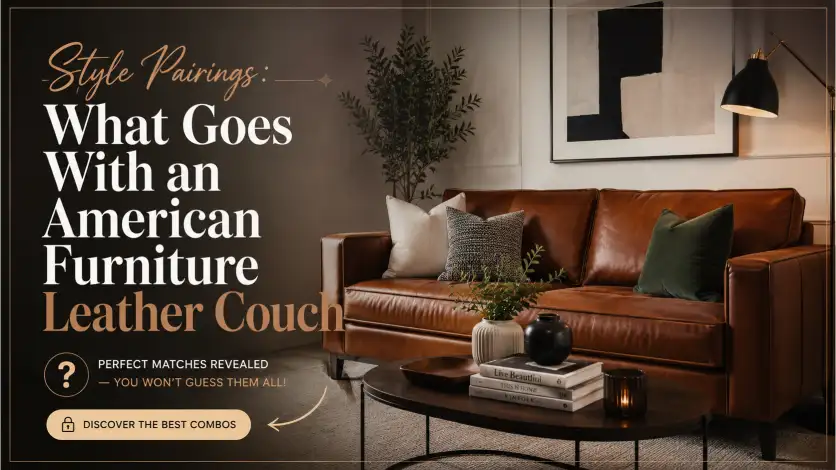
An American Furniture Leather Couch in brown or black leather pairs beautifully with wood furniture, warm-toned rugs, and metal accents, creating a classic and sophisticated look. For brighter interiors, tan and gray leather tones provide more flexibility with modern décor styles.
Add throw pillows and blankets to bring extra color, texture, and warmth to an American Furniture Leather Couch. When mixing leather sofas with fabric accent chairs, keep the color palette consistent to create a balanced and intentional room design.
What to Test Before Buying an American Furniture Leather Couch
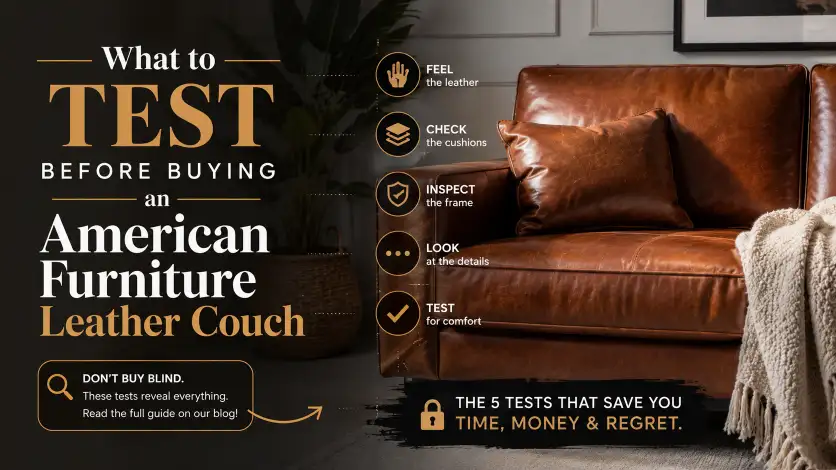
Before buying an American Furniture Leather Couch, test the floor model by sitting on it for several minutes to evaluate comfort and cushion firmness. Check the seams, stitching, and high-stress areas like the arms and seat edges to ensure the construction feels durable and well-made.
Inspect the frame quality by pressing the cushions and checking for any creaking or weak spots. Also confirm whether the couch is genuine leather, top-grain leather, or faux leather, since an American Furniture Leather Couch label may not always provide enough detail about the material quality.
American Furniture Leather Couch: Common Questions
Does an American Furniture Leather Couch scratch easily with pets?
Genuine leather resists light scratching better than faux leather, though claws from larger dogs or cats can still leave marks over time. A textured or distressed leather finish tends to hide minor scratches better than a smooth finish.
Is faux leather a good alternative to a real American Furniture Leather Couch?
Faux leather costs less upfront and looks similar initially, but it typically doesn’t last as long, often showing cracking or peeling within 5 to 8 years of regular use.
Which is easier to clean, leather or fabric?
Leather is generally easier for quick spill cleanup since liquid sits on the surface rather than soaking in, while fabric usually needs more immediate attention and sometimes professional cleaning for tougher stains.
Does AFW offer both leather and fabric options in sectionals?
Yes, sectional collections typically come in both leather and fabric versions, often within the same frame style, so you can compare both materials on the same piece.
How long should an American Furniture Leather Couch last with normal use?
A well-built genuine leather sofa with a solid hardwood frame can reasonably last 15 to 20 years with normal household use and basic conditioning maintenance.
Does an American Furniture Leather Couch smell like leather when it’s new?
Yes, genuine leather typically has a noticeable leather scent when new, which usually fades within the first few weeks as the piece airs out in your home.
Final Verdict: American Furniture Leather Couch vs Fabric Sofa
An American Furniture Leather Couch is ideal for households that value durability, easy cleaning, and a premium appearance, especially with pets, kids, or frequent guests. While the upfront cost is higher, leather can provide better long-term value over years of use.
Choose a fabric sofa if you prefer comfort, warmth, and more color options. The best choice depends on your lifestyle, so always check frame construction, cushion quality, and warranty details before buying for lasting comfort and performance.



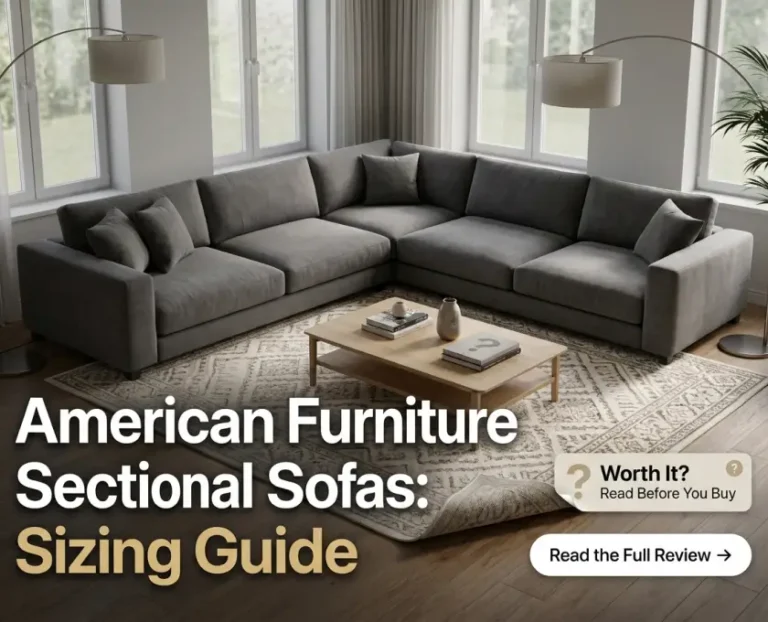
[…] leather and fabric more broadly? See American Furniture Leather Couches vs Fabric Sofas for a full material […]
[…] versus fabric is one of the first decisions most sofa and sectional shoppers face. Our comparison guide breaks down durability, comfort, and price differences between the two materials in […]